Saudi contract manufacturing needs a drug-data handover
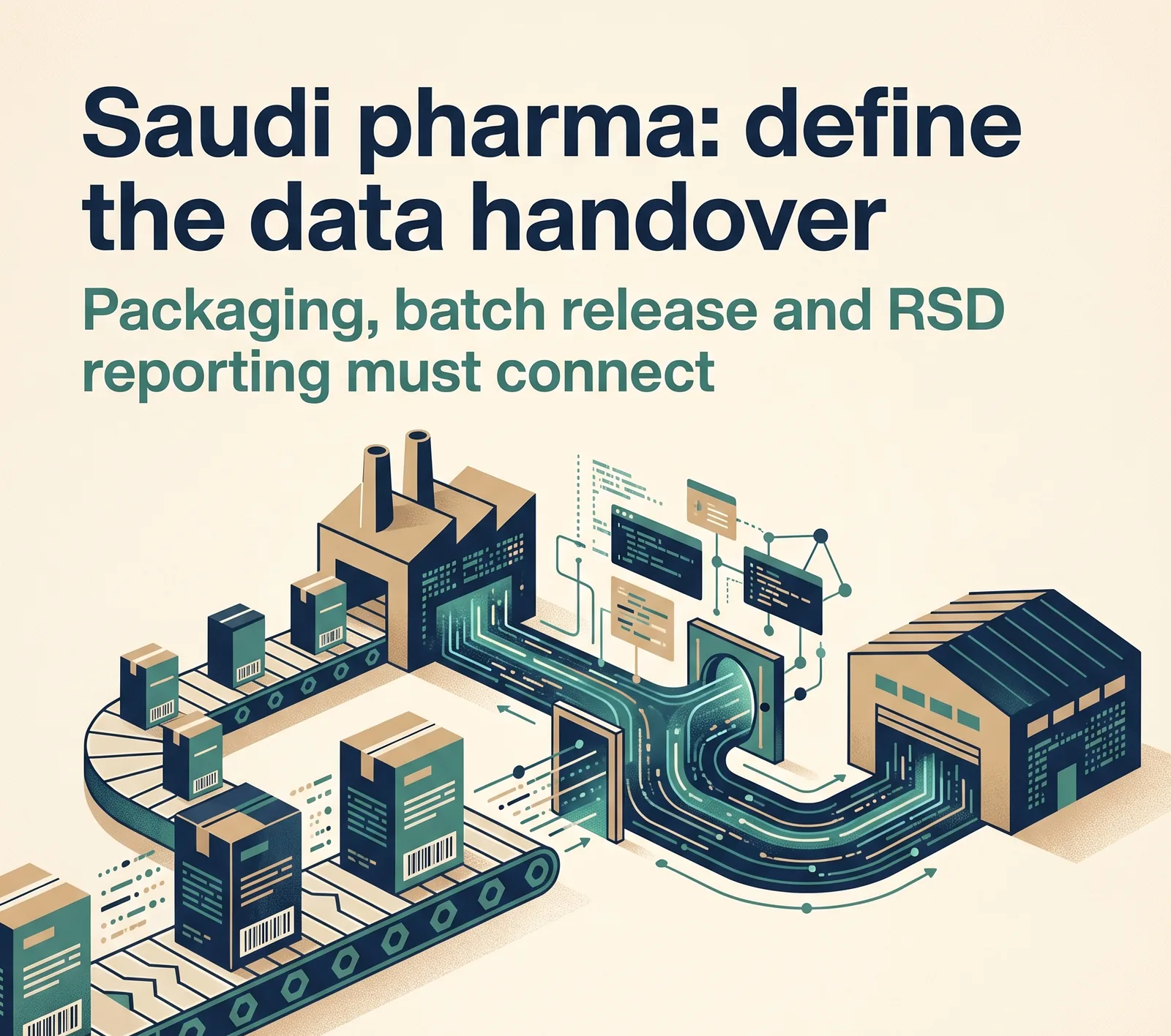
Who reports a drug batch when manufacturing and packaging are split between partners in Saudi Arabia?
SFDA's RSD FAQ gives a specific answer for the supply notification: the manufacturer that prints the 2D barcode and completes batch release should notify the system. It also says a contract manufacturer cannot generate and store serial numbers independently without keeping the marketing company informed of drug movements.
For a foreign pharmaceutical company appointing a Saudi production partner, these details belong in the operating agreement. Identify who completes batch release and who submits the corresponding RSD operation. Specify how the marketing company receives the movement data.
The handover continues beyond the factory. SFDA describes the local factory reporting supply and dispatch, followed by the agent accepting the batch and reporting subsequent dispatches.
Before the first commercial batch, walk a sample record through that sequence with both partners. Confirm the current technical requirements with SFDA for the proposed arrangement. A signed manufacturing contract alone does not demonstrate that the reporting handover works.
Sources
- SFDA — RSD frequently asked questionsSFDA's own RSD FAQ page. Its answers name the manufacturer that prints the 2D barcode and completes batch release as the supply notifier, require a contract manufacturer generating and storing serial numbers to keep the marketing company informed, and describe the local factory reporting supply and dispatch before the agent accepts the batch and reports later dispatches. It covers Saudi drug traceability, not medical devices or all manufacturing, and does not resolve every split-site arrangement; the operating-agreement terms and sample-record rehearsal are editorial recommendations, not requirements or a compliance guarantee. Publication date not stated; accessed 15 October 2026.